
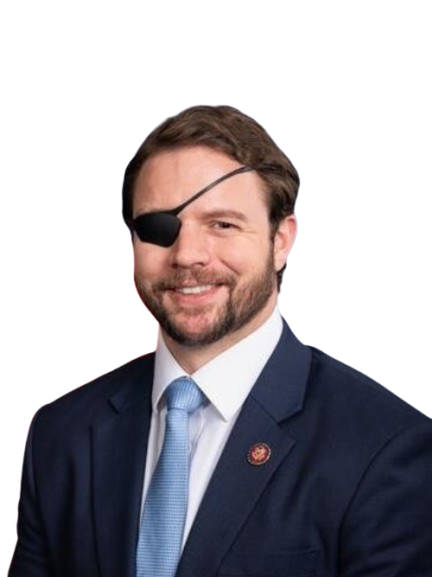
Context, Power, and the Perils of Reading Threat Where There May Be None
An editorial on how intent, context, and public perception collide—often destructively—when private messages go public.
Public controversies rarely hinge on what was said alone. They hinge on who said it, to whom, and
within what cultural context. The dispute between Shawn Ryan and Dan Crenshaw is a case study in how context
can be flattened, intentions reimagined, and reputations put at risk—not by clear wrongdoing, but by interpretation
untethered from reality.
At the center of the uproar is an accusation that Crenshaw threatened Ryan by invoking SEAL Team 6. Stripped of context,
that phrase can sound ominous. Within context, it is something else entirely. Both men are Navy SEALs. They speak from
within the same closed professional fraternity, using shared language, shorthand, and cultural reference points that are
simply invisible to outsiders. In that world, referencing other SEALs—active or former—is not inherently threatening;
it is conversational, even gossipy. Former teammates talk. They watch each other’s shows. They comment. They speculate.
That is not menace; it is peer-group noise.
Shawn Ryan, by his own background and experience, understands this better than most. The notion that he genuinely believed
“his own people” would come after him defies both common sense and the culture of the SEAL community itself. This was not
an external threat delivered by a hostile force. It was internal chatter among professionals who once wore the same uniform.
The Instagram message Crenshaw sent—now widely circulated—can be read as threatening in certain hypothetical scenarios.
But the controversy is not really about whether a threat existed. The real issue is perception and power. Once exposed to a mass
audience, that message risks being interpreted as evidence that a sitting U.S. government official casually leverages military
associations to intimidate critics behind closed doors. If that interpretation were accurate, the implications would be grave.
Lawmakers should never believe the military is a personal instrument for settling grudges. A republic cannot function if power
is exercised that way.
The real danger here isn’t a “threat” as much as it is the public’s interpretation of power—and how fast that
interpretation can harden into a verdict.
Yet intent matters. And so does proportionality. It is at least as plausible that the message was not a threat at all, but an
ill-phrased attempt at intimidation—or even frustration—born of concern over reputational damage. That distinction is critical,
because intimidation through words is not the same as abuse of state power. Anyone in America can send a demand letter. You do not
need to hold office to assert your interests forcefully, even clumsily. Demand letters are a basic tool of civil society.
I know this firsthand. After months of failed attempts to resolve a problem with a major tech platform that left my business unverified
and harmed my reputation, a simple demand letter—yes, drafted with ChatGPT—resolved the issue in under 24 hours. That letter was not
an abuse of power. It was leverage. It was lawful. And it worked.
Crenshaw’s use of a demand letter fits squarely within that same tradition. It is not, by itself, evidence of intimidation or misconduct.
There is no harm in trying to stop speech one believes is unfair or damaging through legal channels. In fact, it would be irrational
not to try when reputational stakes are that high—especially when a single message, removed from its intended context, could
plausibly end a political career.
Another layer complicates this story further. It is possible Ryan experienced discomfort not because he felt physically threatened, but
because the message brushed against a code of honor—a culture that emphasizes loyalty, discretion, and protection of fellow operators.
Under that code, one might feel pressured to shield a peer even when aware of alleged unethical behavior. That tension—between truth-telling
and tribal loyalty—can feel threatening in a moral sense, even if not in a physical one.
Still, when the smoke clears, the simplest explanation remains the most credible: Shawn Ryan was not afraid. He was angry. The demand letter
escalated the conflict, and what followed appears less like self-defense and more like a public contest of will—an ego fight conducted before
millions. The response videos posted on December 12, 2025, drew tens of thousands of comments, most of them supportive of Ryan, showing how
quickly public sentiment can lock in once a narrative takes hold.
But narratives are not verdicts.
If Crenshaw has engaged in wrongdoing—insider trading or otherwise—time and proper investigation will surface the truth. That is how accountability
is supposed to work. Careers should end because of facts, not because of screenshots stripped of context and fed into a public primed to assume the worst.
The real danger here is not a supposed threat that likely never existed. It is the ease with which ambiguity can be weaponized, and how quickly the public
can be led to believe that power is being abused when the evidence is, at best, unclear. In that environment, everyone loses: trust in institutions erodes,
discourse degrades, and truth becomes collateral damage.

Leave a Reply